
A hypothetical 10-foot production station can become portable equipment or permanent construction. For a first-location US rental cafe with a two-group espresso setup, light food preparation, and a five-year lease, that choice affects approval, installation cost, utility access, and how much of the investment can leave with the tenant.
Movable stainless worktables usually beat fixed millwork in a small rental cafe when flexibility matters
Commercial stainless worktables usually provide the safer production base because they preserve utility access and can move with the business, provided their certification, dimensions, load capacity, and stability match the equipment.
| Decision gate | Movable stainless | Fixed millwork | Stop condition |
|---|---|---|---|
| Production | Best for changeable equipment | Best for integrated services | Unverified load or sanitation approval |
| Presentation | Limited concealment | Controls finish, security, acoustics, and display | Customer-facing requirements remain unresolved |
| Access | Utilities remain reachable | Services can be enclosed | Electrical equipment loses required working space, including the applicable 30-inch side-to-side minimum |
Stainless worktables are strongest in back-counter and production roles
Use this planning example, not market data: a 10-foot station with a two-group espresso machine, grinders, brewer, cup storage, packing, dish landing, and light food preparation. Assess commercial food-service tables in 24-inch or 30-inch depths and widths that divide the run cleanly. Decorative furniture and residential tables are not substitutes where food contact, splash, heat, vibration, or plumbing applies.
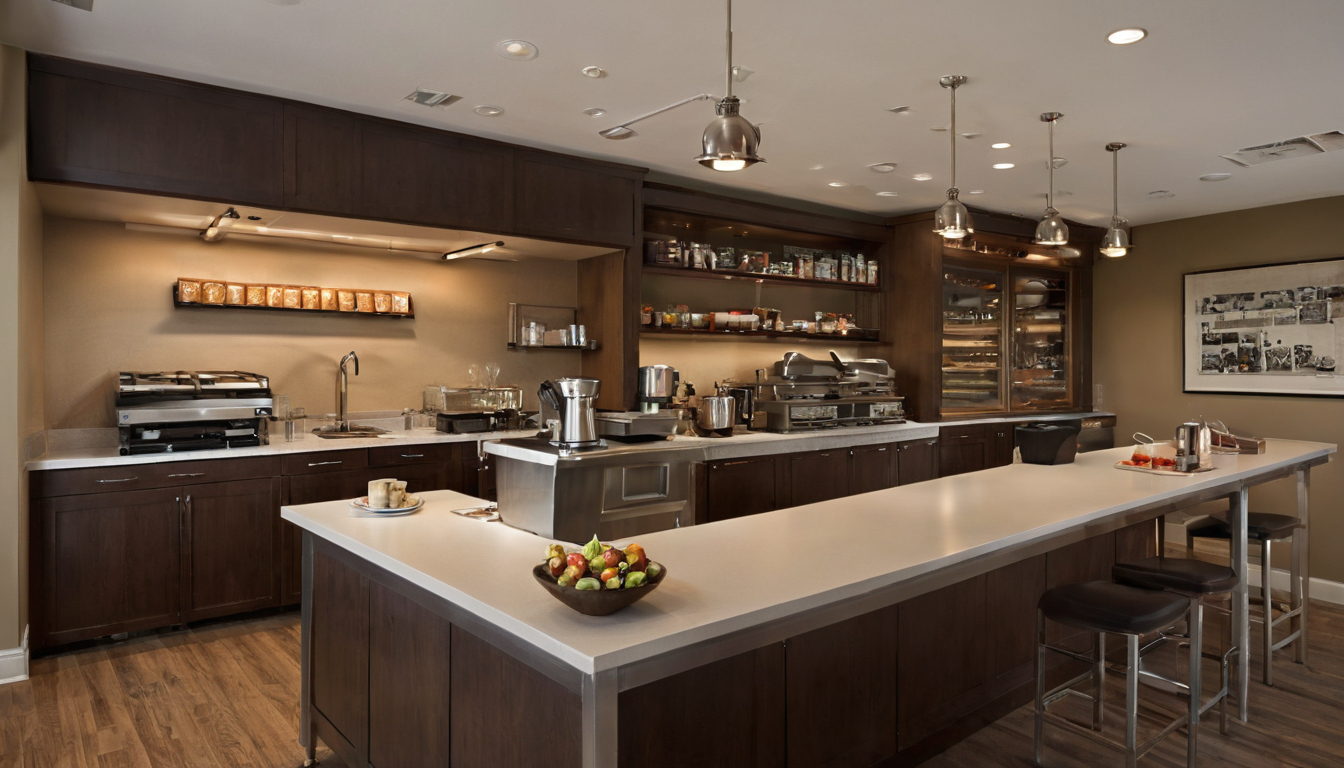
Movable stainless worktables usually beat fixed millwork in a small rental cafe when flexibility matters shown as a planning reference for layout, scale, and material decisions.
Fixed millwork earns its cost where the cafe counter must conceal, separate, or present
Specify commercial substrate, moisture-resistant finish, sealed edges, a durable toe-kick, and an appropriate countertop where the counter conceals utilities, separates queues, secures merchandise, or presents the brand. Accessible dining or work surfaces generally fall between 28 and 34 inches. Qualified LED lighting uses at least 75 percent less energy and lasts up to 25 times longer than incandescent lighting. Before ordering either system, confirm that the proposed stainless installation will pass sanitation and plan review.
Stainless steel is not automatically compliant with cafe sanitation and plan-review rules
Approval depends on intended use, certification where required, cleanable construction, sealed penetrations, installation details, and the food code adopted by the health authority at the cafe’s address.
What sanitation listing does a cafe worktable need in the selected jurisdiction?
The FDA 2022 Food Code is the 10th edition, with its current version dated January 18, 2023. The FDA offers the Food Code as a model for adoption, not a rule that automatically controls every cafe. The FDA also reported December 2024 editorial corrections to the Supplement to the 2022 Food Code, not a newly numbered edition.
- Confirm local adoption: Obtain the current state or local food code, amendments, plan-review guide, and written reviewer guidance.
- Define the use: Tell the reviewer whether the table supports exposed food preparation, packaged goods, espresso equipment, warewashing, or storage.
- Verify certification: Ask whether NSF/ANSI 2 certification or another accredited equivalent is mandatory or accepted for that use.
- Check the official record: Match the manufacturer, model number, dimensions, materials, backsplash, legs, undershelf, and approved options. A retailer’s “NSF” description is not the certification record.
- Verify the assembly: A listed top does not necessarily make an independently sourced base, caster set, or modified table a listed complete unit.
Wall gaps, undershelves, casters, and field cutouts can change cleanability
Inspect the proposed installation, not just the product photograph:
- Confirm whether the table must be sealed to the wall or floor, spaced for cleaning, or made readily movable under local rules.
- Provide cleanable access beneath undershelves and around legs, braces, drains, cords, filters, and supply lines.
- Protect walls behind wet or splash-producing equipment with an approved smooth, nonabsorbent finish.
- Seal utility penetrations and finish cut edges so they cannot collect liquid or debris.
- Obtain manufacturer confirmation that selected feet or casters are approved and that drilling, welding, or cutting will not alter certification.
Once the health authority provides written approval, test whether the table can carry the equipment safely.
A stainless worktable is safe only when its verified capacity matches the cafe equipment load
A safe table needs a published capacity, suitable top reinforcement, a compatible frame, and approved legs, feet, or casters. An unspecified retailer weight claim does not confirm suitability for concentrated espresso-machine loads.
The espresso machine footprint must align with the table’s supported structure
Obtain the espresso machine installation manual and record its dry weight, operating weight with filled boilers and accessories, footprint, foot pattern, service clearances, heat limits, and countertop-support instructions. Ask the manufacturer for a dimensioned foot drawing if the manual omits one.
Match every machine foot to the table manufacturer’s drawing for channels, frame rails, legs, and reinforced areas. The manufacturer must confirm that the exact table supports the machine as a concentrated load, rather than only as a uniformly distributed load.
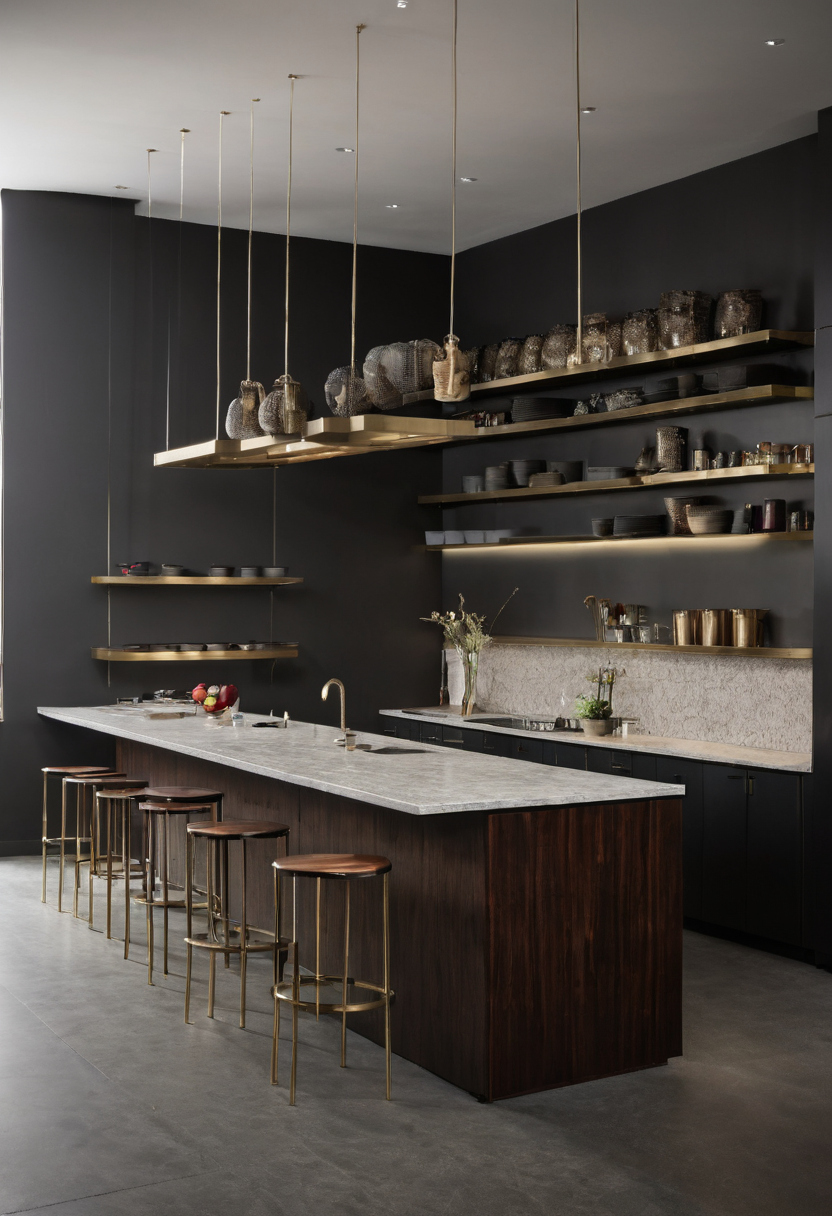
A stainless worktable is safe only when its verified capacity matches the cafe equipment load shown with floor, wall, and fixture relationships visible.
- Stop if the table capacity or load type is unpublished.
- Stop if a machine foot lands beyond the frame or on an unsupported top area.
- Stop if drilling for water, drainage, or power would cut a channel or violate edge restrictions.
- Recheck capacity after adding drawers, undershelves, overshelves, or a backsplash.
- Confirm required leveling, restraint, or anchorage with the manufacturer and local authority.
The table must not obstruct applicable electrical working space, including minimum headroom of 6½ feet or the equipment height, whichever is greater. If adhesives, coatings, or sealants emit volatile organic compounds during field work, the US Environmental Protection Agency recommends increased ventilation during use.
Casters improve mobility but can reduce stability and usable load
Use only casters approved for the exact table. Verify each caster’s capacity, mounting method, wheel material, brake type, and any reduction in the table’s mobile rating. Confirm that the manufacturer permits operating the espresso machine while the brakes are engaged.
Reject a mobile setup if routine movement can strain the power cord, water hose, drain, filtration tubing, or data cable. Specify utility restraints, allowable travel, and bend radii, then test stability while locking the brakes and applying normal portafilter force. The next test is whether those utilities leave enough room to work.
Utility access and working clearances determine whether movable tables remain genuinely flexible
Movable tables improve flexibility only when power, water, drainage, filtration, and data connections remain safe, accessible, and serviceable.
A movable table still needs a planned utility connection zone
Mark a wall or floor utility zone before selecting the table. Size that zone from the equipment manuals and include plugs, hoses, filters, pumps, shutoffs, backflow devices, drain fittings, junction boxes, data outlets, and cleanouts.
- Record voltage, phase, amperage, wattage, circuit protection, and plug or hardwire connection for every appliance.
- Confirm water pressure, treatment, shutoff, backflow, air-gap, and indirect-waste requirements with the local authority and equipment manuals.
- Add manufacturer service space on every side and overhead, then calculate actual station depth, including the backsplash, connections, and overhang.
- Protect cords, hoses, and pipes from heat, abrasion, wheels, feet, and cleaning tools without hiding shutoffs.
- Ask whether disconnection or reconnection requires a licensed electrician or plumber.
Do not park a table inside required electrical-equipment clearance. For applicable single-row electrical equipment, published guidance summarizes working space as 36 inches deep, 30 inches wide, and 78 inches high, with access doors opening at least 90 degrees. The described dedicated space extends to 6 feet above the equipment or the structural ceiling, whichever is lower, and excludes foreign systems. Confirm the locally adopted requirements before fixing the utility zone.
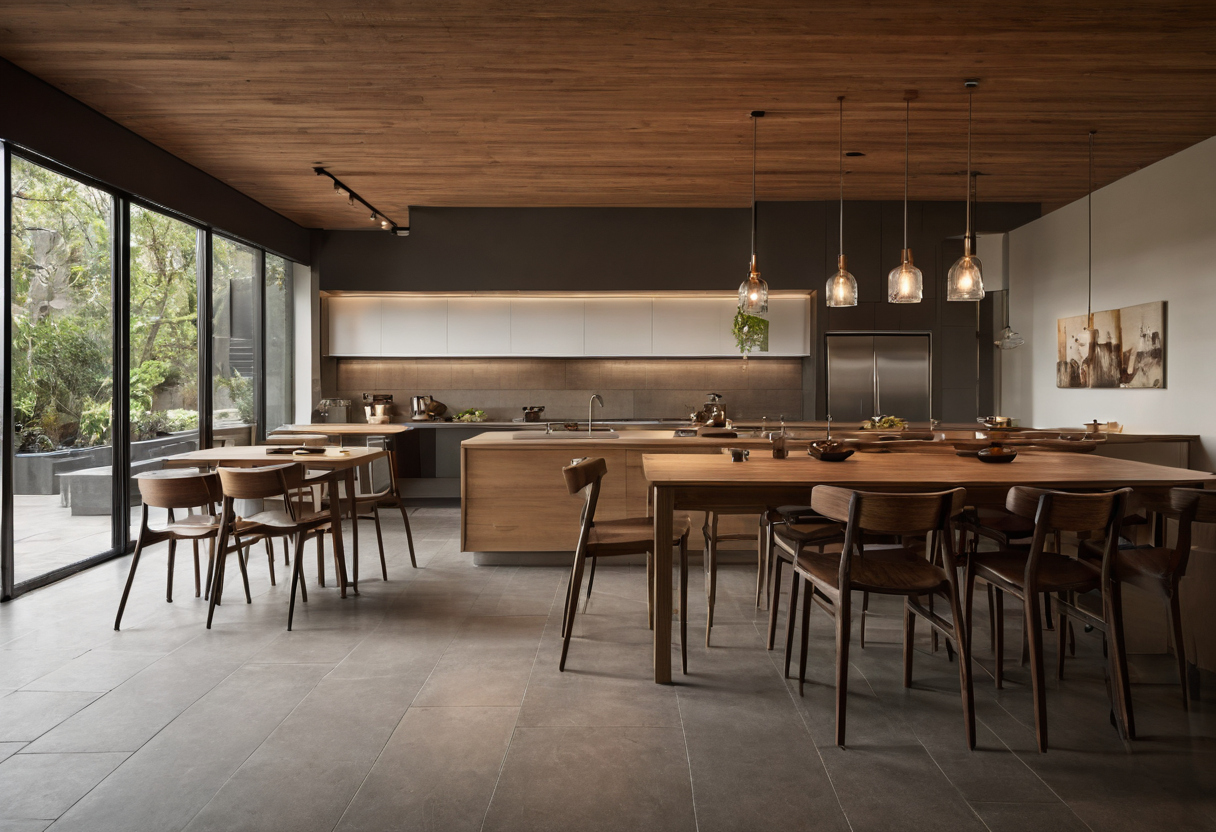
Utility access and working clearances determine whether movable tables remain genuinely flexible shown with finish, fixture, and clearance relationships visible.
Cafe aisle dimensions must be checked with doors, drawers, and staff in motion
Measure the remaining aisle from the station’s deepest projection, not the table edge. Include refrigerator doors, drawers, bins, handles, floor mats, staff positions, the accessible route, and required egress.
- Tape the complete station footprint on the floor and mark equipment edges with cardboard.
- Open every door and drawer while the expected peak-service crew performs a drink cycle.
- Verify local aisle and egress rules plus any required 30-by-48-inch clear floor space under the applicable ADA conditions.
Use the mock-up to test small coffee bar aisle clearances and staff movement. Paints, varnishes, cleaning products, building materials, and furnishings can also emit volatile organic compounds, according to the US Environmental Protection Agency, so include finish selection and construction ventilation in the installation plan. Once the station fits, compare installed cost rather than purchase price.
Installed cost, not purchase price, reveals whether stainless tables are the low-budget choice
Compare stainless worktables with fixed millwork on total installed cost. Use the same station dimensions, loads, storage, utility access, wall protection, and presentation scope for every quote.
What belongs in a like-for-like cafe counter cost comparison?
| Cost field | Movable stainless | Fixed millwork |
|---|---|---|
| Purchase and delivery | Quote required: table, freight, liftgate, tax | Quote required: substrate, finish, countertop, delivery |
| Completion | Assembly, casters, shelves, reinforcement, cutouts, wall protection | Design, fabrication, installation, sealing, trades, permits |
| Project allowance | Contingency, exclusions, lead time | Contingency, exclusions, lead time |
| End of lease | Disconnection, removal, storage, reuse | Demolition, disposal, utility capping, wall repair |
Cheap stainless tables can become expensive when reinforcement and modifications are added
Obtain a fabricator quote before ordering a table that needs cutouts, finished edges, reinforcement, or backsplash changes. Confirm whether field work affects certification, capacity, return rights, or warranty. Include prompt repair of leaks and damp areas in both bids; the EPA residential moisture guide advises fixing wet or damp spots promptly to help prevent mold growth.
After the totals are comparable, read the lease. Surrender and restoration clauses determine how much value removable stainless can retain.
Lease language can make removable stainless infrastructure more valuable than permanent counters
The financial question is not only who pays for the counter, but who owns it and who pays to remove it. Movable stainless usually retains more relocation value, while fixed millwork may become landlord property or trigger restoration work.
The lease should identify what the cafe tenant may remove at surrender
Ask a qualified commercial leasing attorney to review definitions of fixtures, trade fixtures, alterations, abandonment, and landlord property. Confirm:
- Which tables, counters, sinks, and attached equipment remain tenant property.
- What approval is required before penetrating walls, floors, plumbing, or electrical systems.
- Removal deadlines, notice requirements, and the landlord’s right to demand removal.
- Who caps utilities, obtains inspections, patches finishes, and disposes of millwork.
- Whether surrender requires the original condition or another documented standard.
Reuse value depends on condition, certification, dimensions, and the next cafe layout
A used table retains value only if packing, freight, storage, and reinstallation cost less than replacement. Missing certification labels, custom holes, welded additions, corrosion, damaged casters, and unusual dimensions can reduce resale or prevent reuse. This lease test often supports fixed finishes only where they clearly earn their cost.
A hybrid counter system is often the best low-budget cafe interior design decision
The practical low-budget choice combines movable stainless production tables with a limited fixed customer-facing shell. Stainless preserves access and reuse while millwork conceals the parts guests should not see.
Spend fixed-counter money where guests see and use the cafe
Prioritize the service front, accessible transaction ledge, menu, task lighting, end panels, and coordinated wall finish. Keep decorative panels removable and preserve inspection, cleaning, and service access. Then prioritize low-budget cafe finishes without sacrificing service speed.
Use a five-step approval workflow before ordering tables or millwork
- Freeze the equipment schedule and collect manufacturer manuals.
- Confirm local certification and plan-review requirements.
- Verify loads, footprints, utilities, ventilation, and operating clearances.
- Compare installation, removal, and restoration costs against the lease.
- Mock up the station and obtain written approval before purchasing.
Buy the compliant production base first, then fit the visible shell around what inspectors, technicians, and staff must reach.
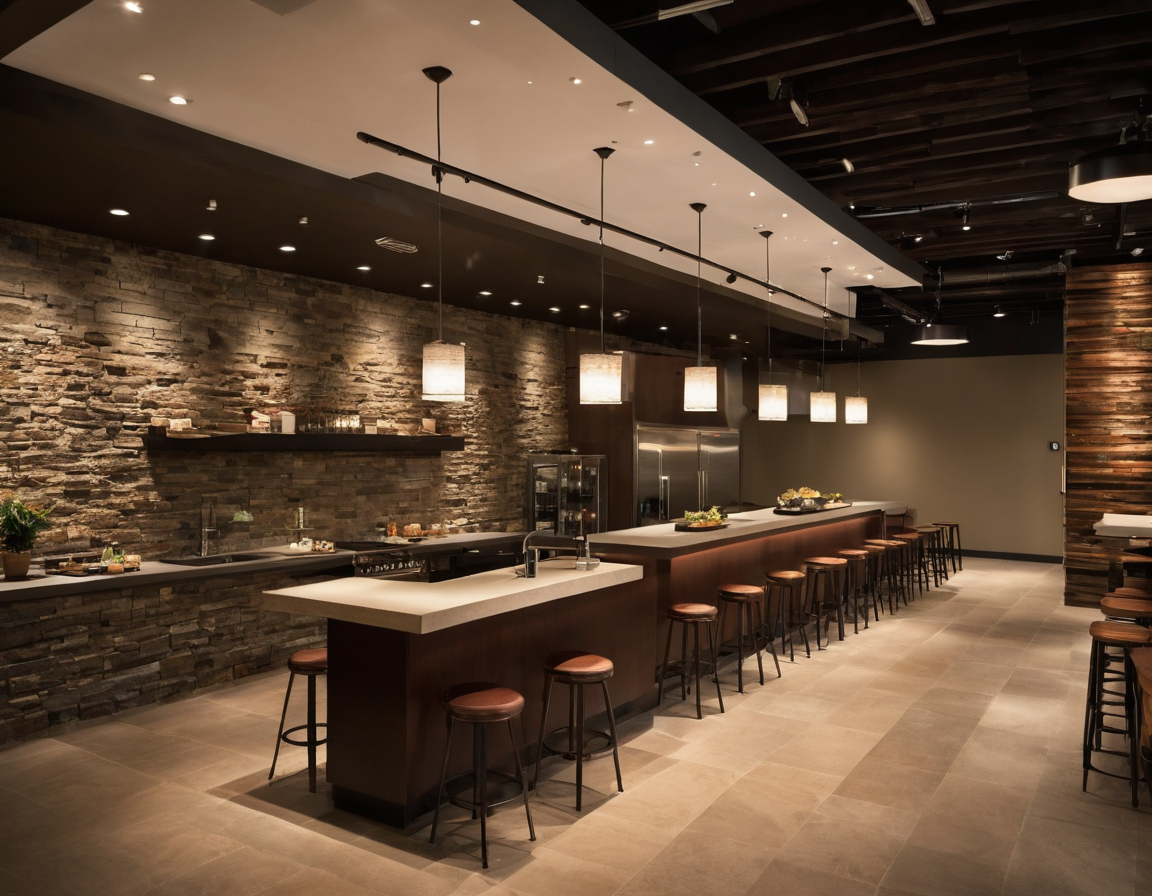
A hybrid counter system is often the best low-budget cafe interior design decision shown with finish, fixture, and clearance relationships visible.
Inspection-desk answers resolve the final worktable questions
Are stainless steel worktables always acceptable for cafe food preparation?
No. Acceptance depends on intended use, local rules, certification, cleanability, installation, and written approval from the reviewing authority.
Is a custom counter or stainless worktable cheaper after installation?
Neither is automatically cheaper. Compare freight, modifications, trades, permits, lead time, removal, restoration, and reuse on identical scopes.